SLAM - THE BASKETBALL CULTURE BIBLE
SLAM magazine has been basketball culture's mainstay for 28 years. If you want to understand basketball beyond what you see on the court, pick up any SLAM issue and read the articles.
SLAM magazine has been basketball culture's mainstay and bible for 28 years. Born from the idea to merge basketball and hip hop, the magazine has become for the sport of basketball, what Rolling Stone used to be for music. A publication not merely about that one thing but everything that surrounds it. A true cultural kaleidoscope.
If you want to understand basketball beyond what you see on the court, pick up any SLAM issue and read the articles. In fact, look at the ads, too. The magazine carries a wide variety of advertising for basketball related products, streetwear clothing and hip hop music, and had a huge influence on how basketball was marketed in the mid to late 90s.
As a casual voice from the very beginning, SLAM covered high school, college and the NBA and told personality-driven stories that did not tie into the current news cycle. Neat side effect: A large number of SLAM pieces are completely timeless because of it, which is why 'old' SLAM issues to a large part read like new ones.
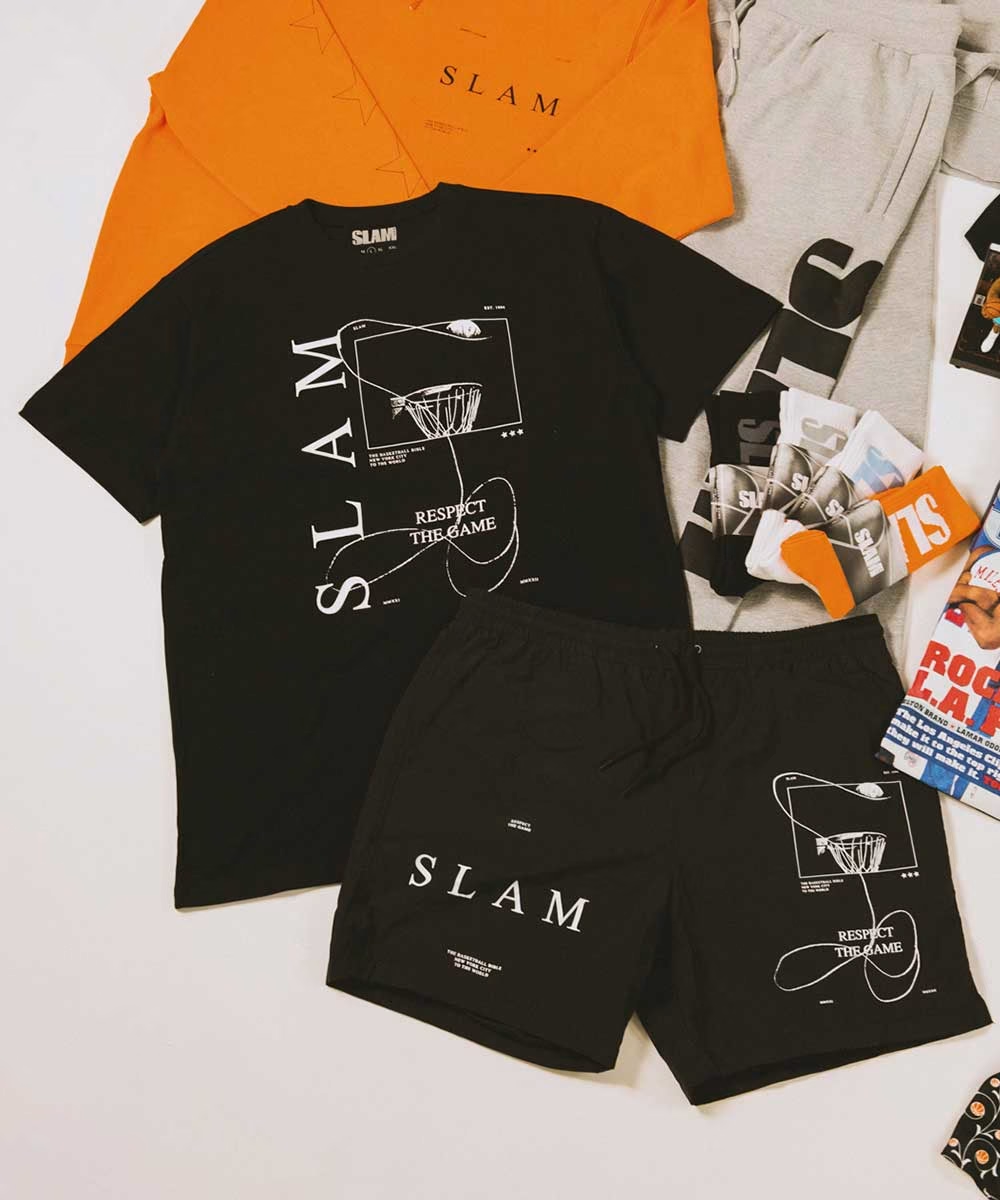
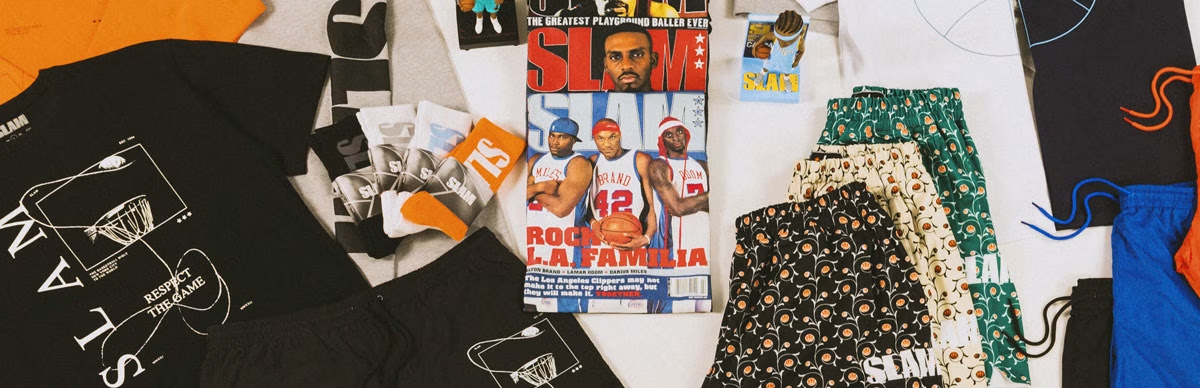
That is why we are proud to present you a small but excellent selection of SLAM products including complete copies of the famous Allen Iverson cover edition and a trilogy of the legendary Kobe Bryant cover issues. T-shirts, hoody, Funko figurines, shorts and socks are also available but only while supplies last. Do not miss out on these!
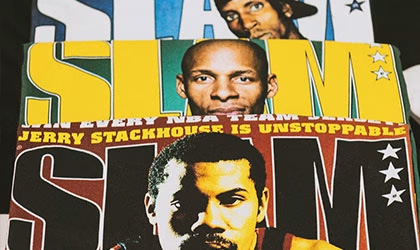

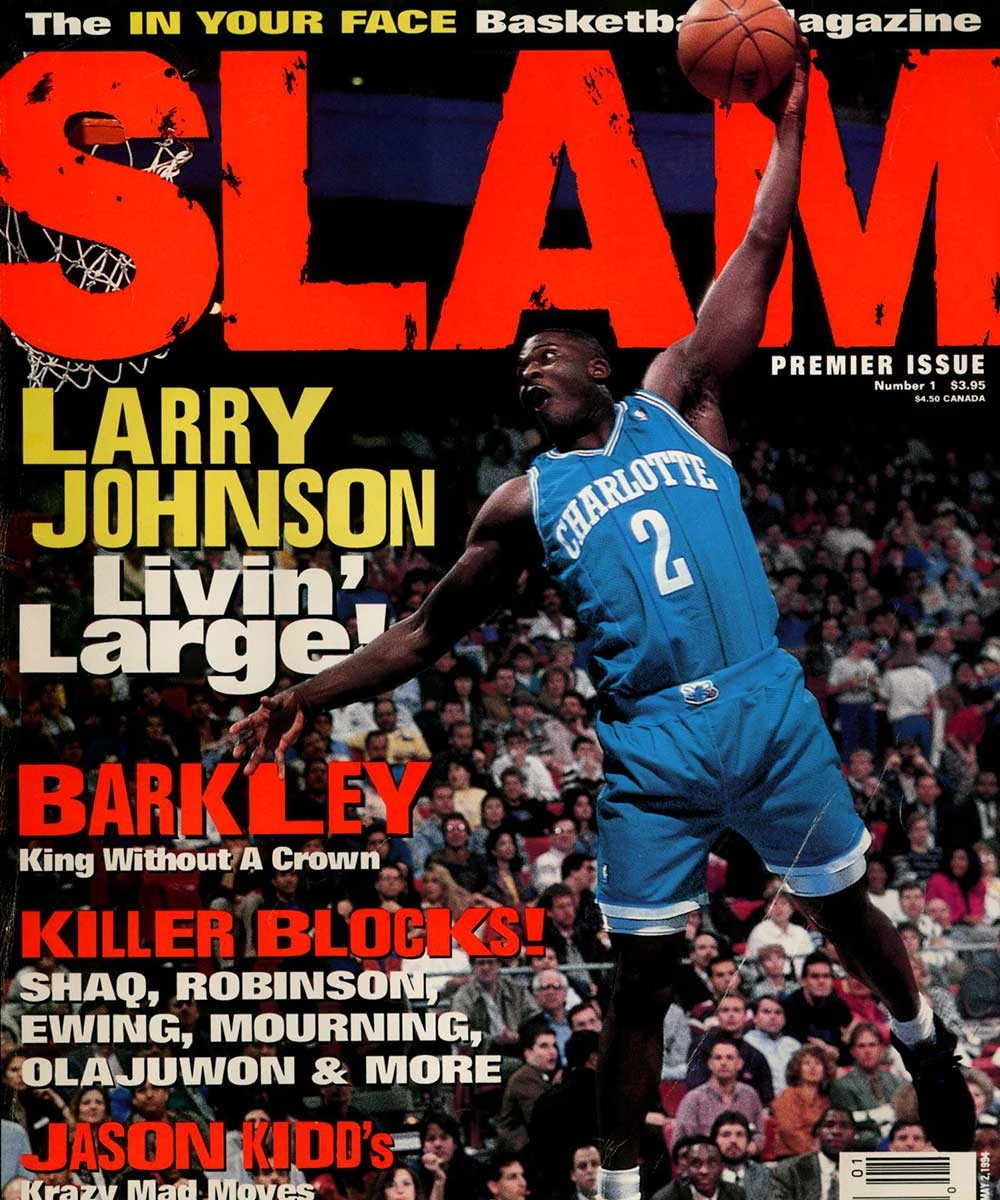
But let's take a closer look at the very first SLAM issue from 1994. It featured short-bit culture stories on Pearl Jam’s near-decision to name themselves after Atlanta Hawks guard Mookie Blaylock and basketball’s growing popularity in Japan. There’s a dunk of the month. There’s a one-page feature on high schooler Steve Wojciechowski, along with profiles of college point guard Jason Kidd, perennial NBA All-Star Charles Barkley, and New York–playground legend Joe Hammond. There are full-page photospreads of the latest sneaker releases, and a six-page photo essay on playground hoopers around the country, including a cameo from a 16-year-old Paul Pierce.
And of course there was the Larry Johnson cover story. The Hornets forward was one of the most exciting young stars in the league. Selected first overall by Charlotte in 1991, Johnson won Rookie of the Year after averaging 19.2 points and 11 rebounds in his first season. He played an above-the-rim game and was a product of a UNLV team that embraced a hip-hop aesthetic. Johnson was a signature sneaker athlete with Converse, starring in a series of popular commercials wearing a grey wig and flower-print dress as Grandmama, an elderly woman alter-ego.
Fast forward to today and there aren’t many brands that represent basketball culture better than SLAM magazine. With a rich 28-year history, SLAM has become a prominent voice in basketball at all levels of the sport and is at the epicenter of basketball culture. The magazine has featured countless players on its cover and created some quintessential moments in basketball history.
SLAM has modernized and gone digital over the past several years, launching SLAM online, multiple podcasts, a myriad of videos and plenty of Twitter content. WSLAM focuses on all things in women’s hoops, LeagueFits shows off fashion in the game and SLAM High School shines a light on the next generation of rising talent. SLAM also launched SLAM Kicks, which is devoted to sneakers and ultimately resulted in a book called SLAM Kicks: Basketball Sneakers that Changed the Game. Editor-in-Chief Ben Osborne led the way in the compilation of articles, photographs and analysis of the most important shoes in the history of the industry and how basketball and popular culture fueled the trends in shoes both on and off the court.
At its core - however - SLAM is still very much about the game we all love, covering basketball at the grassroots stage to the mountaintop that is the NBA and everything else in between.